Complex dental implant cases: how we assess bone loss and full rehabilitation
Situations with advanced bone loss, several missing teeth, or previous treatments that did not turn out as expected require a more detailed diagnosis and a specific plan. Here is how we carry out that assessment.
Private care in Vila Mariana, close to the Ana Rosa subway station.
Learn about our full oral rehabilitation approach →What we consider a complex case
Every mouth has a different bone condition, history and need. We consider situations such as significant bone loss, several missing teeth in the same arch, the need for a full rehabilitation, or resuming a previous treatment that needs new planning, to require a more in depth assessment. In these cases, the detailed diagnosis is what defines the treatment options available.
Who coordinates the assessment of complex cases?
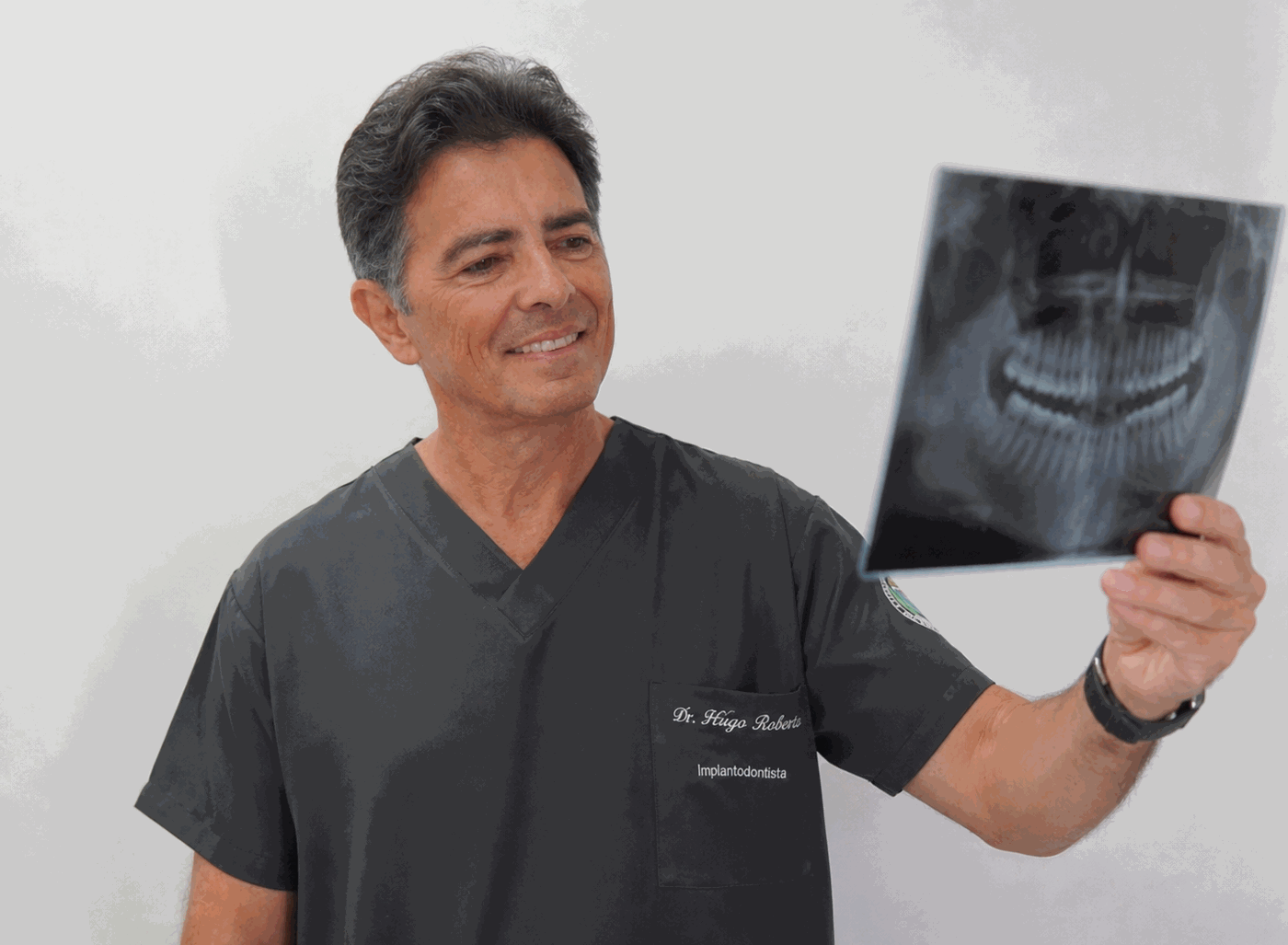
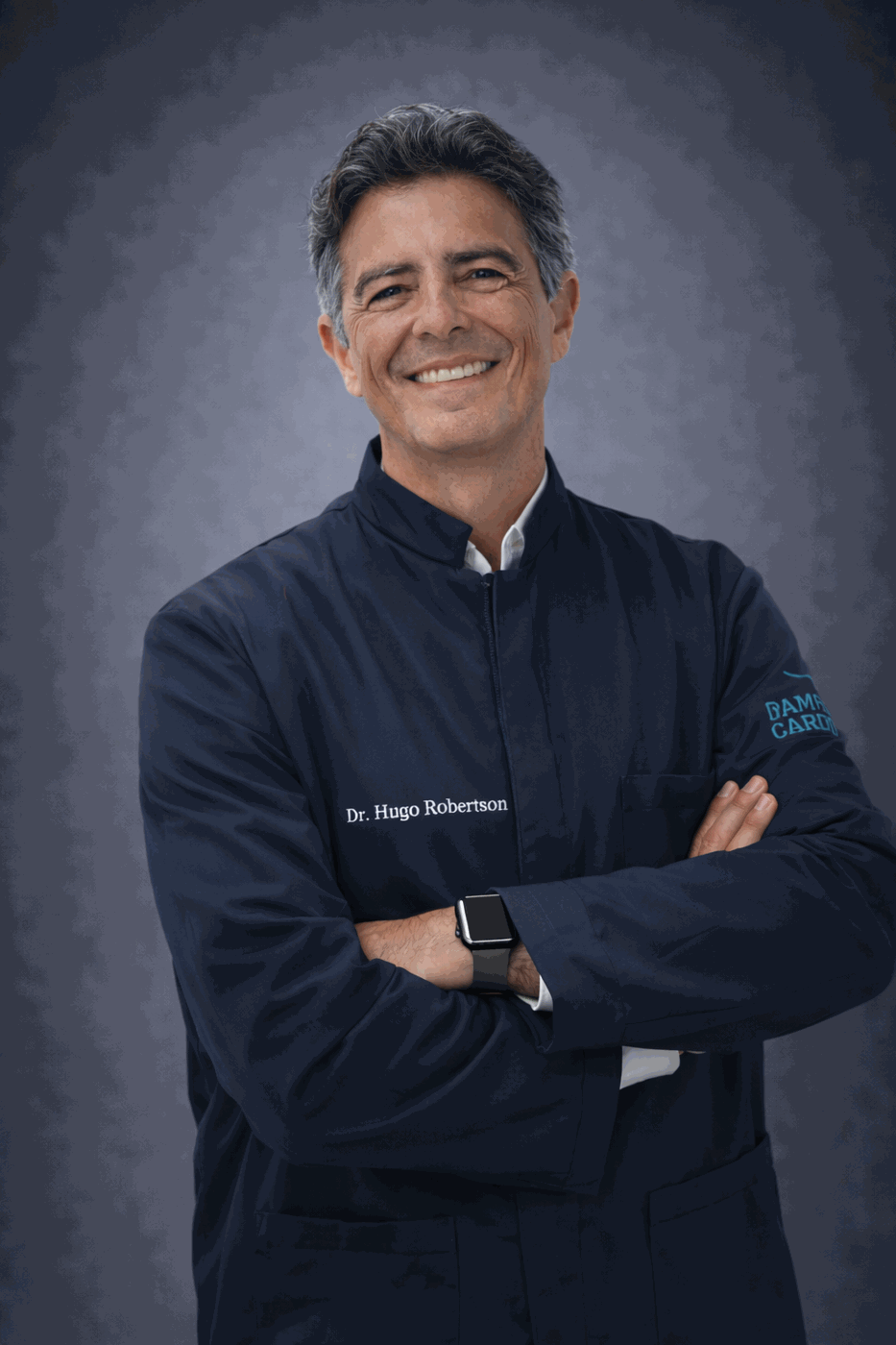
Dr. Hugo Robertson, dental surgeon specialised in Implantology with experience in Prosthodontics and Oral Rehabilitation.
With more than 35 years of clinical experience, over 15,000 implants placed and more than 300 full arch rehabilitations, Dr. Hugo coordinates the cases that involve bone loss, multiple implants, fixed full arch prostheses, zygomatic implants and the reassessment of previous treatments. Learn about Dr. Hugo Robertson's background.
Planning integrates diagnosis, surgery, prosthetics and the in house digital laboratory, considering each patient's clinical conditions and goals.
- • 35+ years of clinical experience
- • 15,000+ implants placed
- • 300+ full arch rehabilitations
- • Planning integrated with the in house digital laboratory
Situations we consider complex cases
Advanced bone loss
Cases in which the volume or distribution of bone requires assessment of bone grafts, tilted implants or other alternatives.
Loss of several teeth
Situations that require defining the number, distribution and position of implants to support a fixed partial prosthesis.
Total or near total tooth loss
Cases that require planning implants, bite, aesthetics, hygiene access and a complete fixed prosthesis.
Reassessment of a previous treatment
Situations with previous implants, prostheses or bone grafts that need to be examined again before any new intervention. The focus is the current clinical condition, a new diagnosis and a new plan.
How we conduct the assessment.
The path to defining the treatment follows technical stages that respect each patient's biological timeline.
- 01In depth diagnosis
Detailed clinical assessment, with a CT scan when indicated, to understand the real bone condition of the area.
- 02Digital planning
Digital planning of the possible alternatives, considering bone volume, implant position and the type of prosthesis.
- 03Discussion of options
Presentation of the viable alternatives, with a clear explanation of each one before any decision.
- 04Planned execution
Treatment can be carried out on the same day or organised in stages, depending on the indication, the stability of the implants, the need for bone reconstruction and the prosthetic plan.
- 05Follow up
Scheduled visits to assess adaptation and function over time.
Common questions about complex cases
I have little bone. Can I still have an implant?+
In many cases, there are alternatives that may allow treatment. The indication depends on the location and extent of the bone loss, overall health, the future prosthesis and the exams. Planning may involve a bone graft, using other bone areas or, in specific situations in the upper jaw, a zygomatic implant.
I have lost almost all my teeth. Is a full treatment possible?+
Yes, the case can be assessed for a full rehabilitation. The diagnosis defines whether the plan involves a fixed full arch prosthesis, multiple implants, preserving remaining teeth, or a combination of approaches.
I had a previous treatment that did not turn out as expected. Can it be reassessed?+
Yes. X-rays, CT scans, reports and information about previous implants and prostheses help with the reassessment. New exams may be requested to understand the current condition before any indication.
Does this type of treatment take longer?+
The timeline varies according to the chosen solution. Some cases can be treated on the same day, others require healing, a bone graft or additional stages. The schedule is defined after the diagnosis.
What makes an implant case complex?+
A case may require more in depth planning when there is bone loss, several missing teeth, a significant change in the bite, the need for a full rehabilitation, proximity to anatomical structures, or a history of previous treatments.
Do I need a bone graft if I have little bone?+
Not always. The need depends on the area, the type of prosthesis and the available alternatives. A bone graft is one of the possibilities, but not the only one in every case.
Can a complex case receive fixed teeth on the same day?+
In some plans, yes. In the Protocolo Fixo 12h, installing the fixed teeth on the same day as surgery is the standard. Other cases may need healing time or additional stages.
Can I request a second assessment bringing my exams?+
Yes. X-rays, CT scans, reports, information about previous implants and treatment plans help with the reassessment, although new exams may be necessary.
Does complex treatment need to be done in a hospital?+
It depends on the procedure, the patient's health condition and the plan. The need for a hospital environment is defined individually.
Other related treatments
Bone reconstruction
Reconstruction of areas with little bone.
Learn more →Zygomatic ImplantSevere bone loss
Alternative for severe bone loss in the upper jaw.
Learn more →Multiple ImplantsSeveral missing teeth
Planning for the loss of several teeth.
Learn more →Fixed Teeth in 12 HoursFull rehabilitation
Full rehabilitation with fixed teeth.
Learn more →Fixed ProsthesisPartial tooth loss
Fixed solutions for partial tooth loss.
Learn more →Why Choose UsWhat to look for
What to consider when choosing an implant clinic.
Learn more →Full oral rehabilitation with Dr. Hugo Robertson
Learn more →Odontoclinic Vila Mariana: fácil acesso pelo metrô Ana Rosa.
R. Domingos de Morais, 725
Vila Mariana, São Paulo - SP
CEP 04009-001
Telefone: (11) 3456-2500
WhatsApp: (11) 99945-9908
Próximo ao metrô Ana Rosa. Fácil acesso por ônibus e com opções de estacionamento nas proximidades.
Atendemos pacientes da Vila Mariana, Ana Rosa, Paraíso, Paulista, Vila Clementino, Chácara Klabin e de todo o centro expandido de São Paulo.
Como chegar no Google MapsEvery case has a different solution.
Book an assessment and understand which path makes the most sense for your treatment.
No forms. Direct contact through WhatsApp.