
Lost a tooth? Understand how a single dental implant works
A single dental implant replaces the root of a missing tooth and supports an individual crown. In many cases, it allows the tooth to be replaced without preparing the neighbouring teeth, with planning focused on function, aesthetics and integration with the bite.
Private care in Vila Mariana, close to the Ana Rosa subway station.
What is a single dental implant?
A single dental implant is the treatment used to replace one missing tooth. It is made up of the implant placed in the bone, the connecting component and an individual crown that recreates the visible part of the tooth.
Unlike a conventional fixed bridge, the implant does not use the neighbouring teeth as anchors. The indication depends on the bone condition, the gum, the bite, the available space and the patient's overall health.
The assessment and planning are carried out by Dr. Hugo Robertson, a dental surgeon specialised in Implantology with experience in Prosthodontics and Oral Rehabilitation.
Anyone who has lost a single tooth, recently or some time ago, and wants to consider a fixed solution that does not rely on the neighbouring teeth for support.
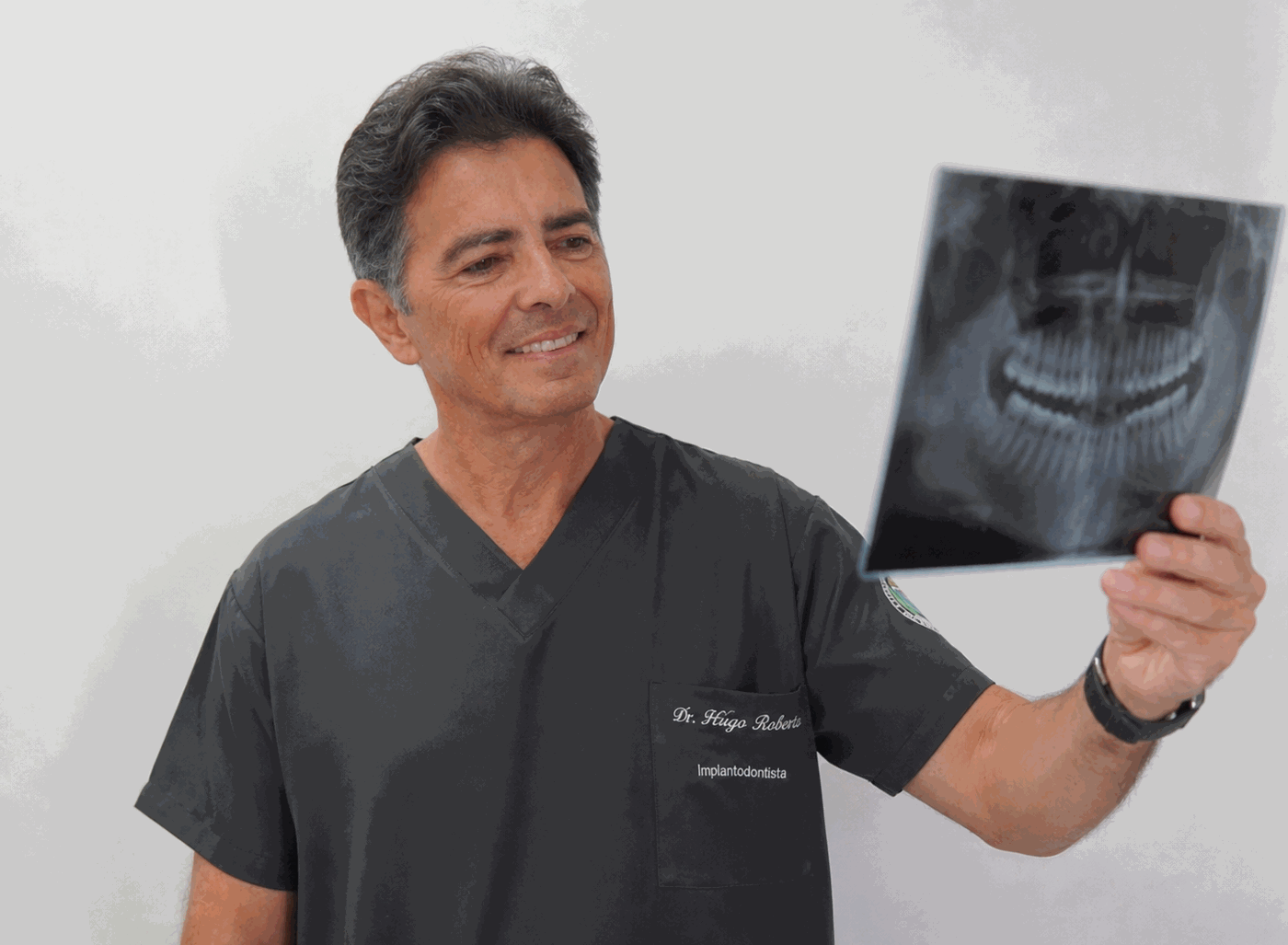
Materials and structure for the treatment
The clinic works with Neodent and Straumann implants, chosen according to the characteristics and needs of each case. For the prosthetic stage, German made teeth are used, supported by the clinic's own in house laboratory, integrating the treatment stages into a digital workflow.
This integration between dental planning, the surgical stage and the in house prosthetic production allows for quicker adjustments and more direct communication between the stages of the single dental implant.
What this means in practice
- •Implant selection based on each patient's clinical conditions.
- •Crowns and prostheses produced with German standard materials.
- •In house digital laboratory integrated into the treatment flow.
- •Planning, surgery and prosthetics carried out within the same structure.
How the process works.
Planning a single dental implant considers the condition of the area, the future crown and its relationship with the bite. The stages and treatment time vary from case to case.
- 01Assessment and exams
Clinical analysis, gum condition, bite, available space and imaging exams. A CT scan is requested when needed for planning.
- 02Digital planning
Planning of the position, angle and depth of the implant, considering the available bone, the future crown and the bite.
- 03Implant placement
Procedure carried out under local anaesthesia, following the clinical plan.
- 04Temporary tooth
In selected cases, a temporary tooth can be placed on the same day. In others, the area needs to remain unloaded during healing.
- 05Integration with the bone
The healing period varies according to the area, the bone condition and the stability achieved.
- 06Final crown and follow up
After integration, the crown is placed and guidance is given on hygiene, maintenance and follow up.
Single dental implant or fixed bridge: what is the difference?
Both options can replace a missing tooth, but they use different structures. The choice depends on the condition of the neighbouring teeth, the bone, the gum, the bite and the plan for the case.
| Criteria | Single implant | Fixed bridge |
|---|---|---|
| Support | Replaces the missing root and supports an individual crown. | Relies on the teeth next to the gap. |
| Neighbouring teeth | Does not use the neighbouring teeth as anchors. | May require preparing the teeth used as anchors. |
| Bone | Requires assessment of bone volume and quality. | Does not involve placing an implant. |
| Decision | Depends on the diagnosis and the individual plan. | Can be considered depending on the condition of the neighbouring teeth. |
All treatments at the clinic are private and individually planned. After the assessment, the patient receives a personalised plan with the stages involved and the corresponding values.
Can the tooth be extracted and the implant placed on the same day?
In some cases, the implant can be placed immediately after extraction. The decision depends on the presence of infection, the condition of the bone and gum, the initial stability of the implant, and the plan for the future crown. Immediate implant placement does not necessarily mean the final crown will be placed on the same day.
Does little bone prevent an implant?
The amount and quality of bone are assessed through exams. When bone volume is not enough for the initial plan, changes in position, a bone graft or other approaches may be considered. Having little bone does not automatically mean a single implant is impossible.
How do you care for a single dental implant?
The implant needs daily hygiene and periodic follow up, just like natural teeth. Maintenance involves cleaning around the crown, gum control, bite assessment and exams when needed.
Frequently asked questions about single dental implants.
Not every tooth loss needs to be treated the same way. An implant is one of the alternatives to replace a single tooth, but the indication depends on the bone, the gum, the bite, the available space and the condition of the neighbouring teeth.
There is no single timeframe. Over time, the neighbouring teeth may shift, the bite may change and bone may be lost in the area. An early assessment helps clarify the options before these changes progress.
Placement is carried out under local anaesthesia. During the procedure, the goal is to keep the patient comfortable. Afterwards, there may be temporary sensitivity, swelling or discomfort, managed according to the guidance for each case.
In selected cases, yes. The decision depends on the stability of the implant, the treated area, the bite and the clinical conditions. When immediate loading is not indicated, other temporary options may be considered.
The implant replaces the missing root and supports an individual crown. A fixed bridge uses neighbouring teeth as anchors and may require preparing those teeth. The choice depends on the diagnosis and the plan.
The time varies according to healing, the treated area, the bone condition and the possibility of a temporary tooth. In many cases, the implant needs to integrate with the bone before the final crown is placed.
Not always. The need for a graft is defined by the exams and the plan. When there is little bone, different approaches may be considered depending on the area.
In some cases, yes. The indication depends on the condition of the bone and gum, the presence of infection, the stability achieved and the plan for the future crown.
The plan depends on the exams, the complexity of the case, the type of crown and the need for additional procedures. After the assessment, the patient receives a personalised plan with stages and values.
Hygiene is carried out daily with a brush and products suited to clean around the crown. Periodic visits help assess the gum, the bite and the maintenance of the treatment.
The absence can favour movement of the nearby teeth, changes in the bite and bone reduction in the area. How intense these changes are varies from case to case.
Yes. The crown is a separate part from the implant and may need maintenance or replacement over time, depending on wear, aesthetics, fit or clinical condition.
Not necessarily, but they can influence healing and the risk of treatment. Overall health control, habits and follow up need to be assessed before any indication.
Odontoclinic Vila Mariana: fácil acesso pelo metrô Ana Rosa.
R. Domingos de Morais, 725
Vila Mariana, São Paulo - SP
CEP 04009-001
Telefone: (11) 3456-2500
WhatsApp: (11) 99945-9908
Próximo ao metrô Ana Rosa. Fácil acesso por ônibus e com opções de estacionamento nas proximidades.
Atendemos pacientes da Vila Mariana, Ana Rosa, Paraíso, Paulista, Vila Clementino, Chácara Klabin e de todo o centro expandido de São Paulo.
Como chegar no Google MapsEvery case has a different solution.
Book an assessment and understand which path makes the most sense for your treatment.
No forms. Direct contact through WhatsApp.